Saturday, March 4

P2P TV

PBS's Robert X. Cringely crunches the numbers on video over the internet and finds that it'll take 20 years given Moore's Law to even begin to reach the bandwidth requirements to deliver real-time TV over the internet. That is given the current centralized server distribution model. The solution, P2P.

Bittorrent can scale to meet the needs of distribution already, but it doesn't stream video. Cringley goes into several potential P2P options in this amazingly informational article coming to the culminating point that ISP's though now fighting a battle for control over the data that flows over their networks will eventually grow to be big supporters of P2P distribution as ultimately increased network usage will prove a windfall.

Link: PBS | I, Cringely . March 2, 2006 - Peering into the Future

My take...

First of all I've been talking about this issue of the adoption of TV over cellular networks to anyone who will listen... So called mobile TV is at it's present state completely inept. The single greatest reason is because cellular carriers are trying to control everything that crosses their networks allowing only exclusive video content over their networks... there is therefore now very little choice and very little offerings for video over cellular networks. Very few options means very little incentive for adoption. On the other hand there's another model... allowing anyone to author content for delivery over cellular networks... even encouraging it. This will create a myriad of options for consumers and all sorts of options driving adoption. Meanwhile, much like in Cringley's scenario the carriers will make MINT based on the demand for bandwidth. This want for a hand in content has one simple reasoning, greed, and it's actually hurting them as it slows adoption.

As for cringley's article. I must respectfully point out the following points.

1) While cringley does prove that mass distribution of video over the internet is possible, he fails to compare it to the cost of delivering popular media over current broadcast mechanisms. The internet has a long, long way to go before it even begins to compete with satellite and cable in delivering populist media.

2) Therefore big TV and Cable satellite markets have no incentive to jump into delivery over the internet in mass given the much cheaper cost of broadcast delivery, even if it is in the interest of ISP's, which may be true but they don't necessarily have a clue.

However, it does make sense for the other 99% of the world that doesn't own or have access to broadcast mechanisms... it's here that innovation will happen and indeed it already is... especially on the fringes with small and midsize publishers and businesses just outside of the reach of broadcast. In talking to midsize publishers I find that such technologies as audio and video podcasting are just what they ordered, and what with over 20,000 audio podcasts and 6000 video podcasts it's hard to say otherwise.

Innovation does NOT happen from the top down. It happens from the bottom up... sometimes in the middle... but always where there's the greatest disparagement in the network. With broadcast media... it's those publishers just outside of the loop.

3) Bonus round... While I'm very interested in these other P2P technologies cringley mentions ultimately I think bittorrent and open standards have the edge. In short I believe bittorrent will be the first likely candidate for reatime streaming media. Indeed there are already people working on it though their are tremendous technical considerations, especially given the average up-speed on most home DSL and cable modem connections, but those on highspeed connections could be able to watch a video in real-time in within the year. Then all we need are video aggregators and players with integrated bittorent like the Windows version of FireANT

Technorati Tags: , , , , ,

Crooks & Liars video blog on Chicago Tribunes top 50

Good to see the vlog Crooks & Liars on the Chicago Tribune's list of the 50 best websites. It's a great example of using fair use and video blogging to recontextualize the political debate, and by recontextualize I mean deconstruct it's absurdities and eccentricities.

From:Chicago Tribune | Steven Johnson
Crooks & Liars (www.crooksandliars.com): Video links to all the cable news nonsense that goes on during the day. Usually has clips of politicians embarrassing themselves.
Crooks & Liar's has been getting an increasing amount of attention, even beating out Rocketboom, Mobuzz and other popular vlogs for a Bloggy (or was that a Webby I can't remember and their websites are unforetunatly very poor.)

The political debate is no longer ruled by only cable and sattelite powers. In fact I bet it burns them to no end any punk with a blog and some bandwidth can now pick apart their absurdity piece by piece. Who are we to dare think we should have an equal say in the political debate. :)

Me I'm just glad we can have a little more depth in the national political debate than the talking points, soundbytes and polarized amped up news shows pioneered by CNN & Fox which favor controversy over substance. Pundants beware, your mistakes and misdeeds are no longer relegated to the vaults.

This is just one of many great examples why the Broadcast Flag must be shot down. Like it or not the national political debate has been dominated by television and yet everyone has as much a right to participate in that debate as Rupert Murdock. The broadcast flag would put a litteral technological wall around television, and under a strict interpretation of the DMCA it would be illegal to break the copy protection scheme's and post such TV clips as Crooks and Liars does for the sake of discussion and debate. This is the very reason why fair use law exists and corporate rights should not userp citizens rights. These clips which are accessible and referenceable from anywhere in the world are a very important and understated part of the national political debate and will become much more so by 2008.

Politicians are now vlogging and podcasting. I can't name them all, but have you checked out Barack Obama's Podcast or Al Gore's videoblog? I know there's dozens, perhaps even a hundred more out there already but we've barely just begun to scratch the surface of a huge change in national political discourse.

By fundamentally changing the mechanisms by which national political discourse takes place we are fundamentally changing the power structure ant the political process. We saw it most obviously with the rise of a political dark horse, John Edwards rising quickly from relative obscurity to national poltical power in 2004. Even though he did not win his parties endorsement for presidential candidate it marked a change in politics as he most famously gained huge groundswell through a grass roots fundraising effort in large part do to blogging and the website meetup.com. Specifically, the $50 million he raise was not only a new record, but it was raised primarily in small contributions of fifty dollars or less.

As dynamic as the change was in 2004 it's going to be a whole new political process in 2008 with the advent of podcasting and video blogging. Never before have politicians been able to speak directly to their constiuents regardless of place and time. The impact of widespread and near limiteless direct discourse will in combination with new media undoubtedly heighten the level of political discussion.

Much like blogging I expect these new mediums of podcasting and video blogging to really come into their own in an election year.


Technorati Tags: , , , , , , , , , , , , , ,

Friday, March 3

Detroit Free Press blames cell phone on fatal crash, despite presence of cocaine, marijuana and ampetamines

I don't know why I'm posting this. Perhaps because I found it to be a new low for mainstream journalist standards. It deserves some sort of award.

From an article titled Fatal crash blamed on cell phone user and fully dedicated to the ills of using a cell while driving.

In a case that underscores a national effort to restrict handheld cell phone use while driving, Macomb County prosecutors said Tuesday that they have charged Cates, 20, of Hazel Park with negligent homicide in the death of 55-year-old Diela Lucaj. They say Cates was talking on his cell phone when he drifted across the center line in Warren and killed the restaurant cook from Sterling Heights.

Since then, prosecutors said they have learned that Cates had drugs in his system -- cocaine, marijuana and amphetamines -- which will likely up the charge to involuntary manslaughter, punishable by 15 years in prison.


Number of times "cell phone" is mentioned in this article?

Twenty one.

Number of times it's mentioned the guy had cocaine, marijuana and amphetamines in his system?

Just once.

The entire article is dedicated making a case for banning cell phone usage by drivers despite the fact that the guy was likely severly impared by the presence of three different drugs in his system. Great reporting... truth is what you make it.

Way to go Ben Sxhmitt and Amber Hunt of the Detroit Free Press. Excellent journalism.

You know, I agree. If banned cell phone usage while driving all the those people completely wacked out on drugs would certainly stop chatting on the cell phone and pay much more attention to their driving.

Wednesday, March 1

Aeropress Coffee Machine

Aeropress Coffee Machine(Trying out Flickr blogging)

From Alan Adler, the scientist, professor, engineer and inventor of the Aerobie... a coffee maker that claims to be the most efficient coffee maker ever. While I love the design, quite similar to a french press coffee maker, and the price ($30) is quite affordable, I wonder how efficient and useful this really is. They claim it takes less than 30 seconds to make a cup of coffee, but obviously that doesn't included the time and energy it takes to boil some water. So, while it may be much more efficient to use a traditional drip style coffee maker for any multi-cup brewing I'd still go for this over a french press for camping or such times when electricity is scarce, or I only need one cup of coffee. But honestly, when do you only need one cup of coffee. :)

Oh, Just as long as it comes in Lexan and not just glass that is.

Fancy gadgets. :)

Spotted on digg.com, original article at www.gizmag.com/go/5051/


On a side note, a little ranting on copyright.

Turn back now all ye' whom are faint of patience.

You've been warned... I wouldn't be me if I didn't bitch about copyright issues.

Consider this a liberated image. I hate gizmag.com's website, it sucks tremendously, way to much advertising and crap to the point of making it hard to read and navigate. I had to dig this image out of their website and download it to my HD in order to get it onto flickr and of course they put their crappy watermark on the image like they own it, but it's really just a promotional image from the manufacturer that they likely have no right to alter at all.

This sort of reminds me of the thinking of the so call broadcast treaty (aka. "the re-distributors copyright") big media lobbyists are trying to get pushed through congress. (Side note: I wish EFF would give a standardized name to... and initiate wikipedia articles on these things to make them more accessible. It's impossible to find and keep abreast of these issues.)

It's basic reblogging 101... Respect the original photographer or copy right owner. Just because you're redistributing something doesn't mean you own it. In fact I'd be willing to bet that while this image is specifically for this sort of promotional usage that altering the image is a violation of the original copyright owners granted usage rights.

Sadly, this sort of thing is standard practice these days among gadget blogs. Watermarking product images has become the new tyranny. I'm not against all watermarking, just stick to watermarking content you actually own rights to folks. :)

On a final positive note, at least we're talking about improper watermarking instead of the tyranny of digital rights management technologies. If certain powers get what they want I want have the luxury of bitching about having to liberate media, I'll have to bitch about not being able to liberate media, or at the very least spend much more time liberating it so i can reference it.

Most newspapers have learned a long time ago that they can't control who copies the text of their articles or images, and in fact 99.99% of all redistribution, copying and quoting of texts and images are very beneficial to them. Meanwhile blatant and habitual abusers are actually EASIER to identify and take legal action against... just read any old news article in the past year on plagiarism in education. Googling for suspected plagiarized phrases is about as easy as it gets. Images are a little trickier, but I guarantee you theft of images... nor articles is a business concern for online newspapers.

Yet here we are... hypocritically it's blogs like gizmag who are abusing copyright law and watermarking technologies by slapping their logos on ALL pictures wether they own them or not. Cheers to the great gadget blogs like Gizmodo and Engadget for doing a better job.

The Minnesota Republican Party's spyware CD

20060227_screenshow_2From Digg.com...
This week the Minnesota Republican Party is distributing a new CD about a proposed state marriage amendment. The problem ? the CD sends your answers back to headquarters, filed by name, address, and political views. No mention of that in the terms of use. No privacy policy at all.
I found this really stunning, but the most recent blog posts by senior editor Bob Collins of Minnesota Public Radio (1, 2, 3, and 4) reveal that the extent of the issue is actually much worse.

In addition to the offenses mentioned on Digg.com the collected data is being posted to an insecure and publicly accessible web-server, including a spreadsheet with all 25,000 names and addresses on the mailing list. All of it is publicly accessible by someone with the right technical know how.


gopscreenshot4From MPR: Polinaut: The GOP CD
I played around with it some more to try to figure what information is being gathered. The first clue the GOP was tracking was the fact when it starts it says something like "Welcome, John Smith." And if you're not John Smith, you can "apply" for an activation code (see photo). The data you have to submit is: Name, spouse's name, district, address, e-mail and phone. Only name, address, and phone are required.

I filled out this information using Tim Pawlenty's address and it gave me a code to allow me to continue further.

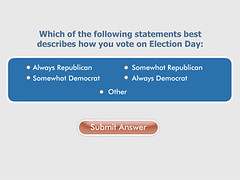
The first section "our culture" features a presentation with Mary Kiffmeyer, and then asks "which of the following BEST describes your position on abortion." The answers are "all abortions should be legal, abortions should be legal but only in the first 3 months, abortions should be illegal except in the case of rape, incest, or the life of the mother is threatened; and abortions should be illegal.

It then gives you another blurb of Kiffmeyer and then asks if you support the amendment on marriage. And then asks if you believe in the 2nd amendment. It does not say you can just hit SUBMIT and skip the answer. And it doesn't say the results are being transmitted.

And from the latest post as of this writing, GOP CD accumulates data, but data is not secured
... Now that's pretty basic stuff: what your IP is, what your CPU is, what your operating system is. But is it possible for me to find out how you vote in elections? What your position on abortion is? Or even how long it takes you to answer those questions? ? Can I get your private phone number, your address, your name, your spouse's name, your IP?

Yes. Someone did.


Using the stream indicated above, people way smarter than me were able to figure out the destination for the data being accumulated, and then poked around and found the site. And the data was not secured at the site.

I checked to see if two entries I made via the CD -- one for Tim Pawlenty and one for Joe Blow -- showed up in the database. Yep. this must be the place.

In typical "blog storm" fashion all this information has turned up following an original feature story yesterday (Feb. 27th), entitled GOP steps up efforts for constitutional amendment on marriage on Minessota Public Radio which mentioned the interactive CD. Interestingly the focus of the amendment would be to abridge the definition of marriage to being a "union between one man and one women". This and many other questions regarding political viewpoints from abortion, to gun control, to voting preferences were all contained in the interactive questionaire. All of this data compiled with name and address were then uploaded to a 3rd party web-server which is insecure and therefore publicly accessible.

Anyway, it would appear the GOP has done their constituents a HUGE disservice. Shall we recap the offenses?
  1. There is no disclosure the information is being collected.
  2. There is no disclosure of what's being done with the information, in other words no privacy policy.
  3. The collected data including a vast amount of personal and political information can be publicly accessed from an insecure web-server by any individual with a bit of technical know-how.
  4. INCLUDING the entire original mailing list of more that 25,000 names and addresses
There's no denying that this goes beyond foolish, to the point of being malicious. This isn't just some crackerjack programmer slapping together some code. It is according to the original editor Bob Collins very professional package, and therefore I assume a very deliberately put together package which is completely out of protocol with normal polling practices.

Even if there is a printed cover letter or some packaging that was overlooked that discloses the collection of information and it's intended use this is still one hell of a misguided attempt by the GOP to poll their constituents. I'm more than a little amazed and curious as to how this will play out.

Speaking of which, the story is continuing to unfold on Bob Collins blog on Minnesota Public Radio's website.

Technorati Tags: , , ,

Sunday, February 19

Homestar Runner, now in video podcast


Just in case you don't know Homestar has a video podcast feed. You should subscribe to it. :)

Watch movie (Quicktime, 2.7 min, 7.3 MB)

Their homepage: Strong Bad Email:

(Via Mefeedia)

Sunday, January 29

The network effect - the power law behind the lightnet and open access media

The network effect is the reason why AOL died and why closed and inoperable networks and markets fail.

People used to mistakenly think it only applied to pure communications technologies like telephony... the value of the network was directly proportional to the number of people with phones and therefore INoperabile telephony networks failed... but it's not just an issue of people connecting to people.... It can also as is clearly the case of the internet people connecting to ALL the services and tools of the internet.

The internet has brought the issue of accessibility to the forefront because it has changed the expectation. Having to have a VCR and a DVD player was an expectation in the real world... now that people have such an increased awareness and expectation of access they won't stand for in-operability... like NOT being able to play a CD on this computer or that computer... like NOT being able to play certain videos on certain devices... but more importantly not being able to use THEIR email platform with their cellular carrier... or view certain kinds of media with their computer or hardware. In-operability is not an option.

What most people don't understand is how, much like AOL, anything connected to the web that is not network agnostic (aka. network independent) such as cell phone carriers who play favorites and block other IM, mail, video, ring-tone, or other content... or bell south / AT&T and other ISP's whom want to block things like VOIP or "prioritize" their bandwidth to discourage competitors... well it's why they will ultimately fail...

The value of these internet access providers to THEIR customers IS (or if not already, will be) directly proportional to their customers being able to use ANY service on the internet.

The network effect is the internets own innate power law... above and beyond the fact that some of these practices being proposed by ISP's, cellular carriers and other access providers are or may be illegal and anti-completive.

So... in addition to this being a fundamental power law of the fantabulous and all reaching and spreading internet... it will also explain why things like podcasting and video blogging will proliferate to ALL edges of the network from Tivo's, Akimbo's, to cell phones, PSP's and ANYTHING that's network connected.

The real issue is not that some ass-hole cellular provider has in their greed mistakenly thought brokering "exclusive" content details will increase their profit... the real issue is how fast and how important is it for hardware makers to build the hardware, such as portable network devices that support rich media (RSS, mp3's, mp4, and other media and syndication formats)... and how fast can we build the infrastructure to get ALL this media piped to these devices.

Specifically we'll need seamless transcoding and rich tools for intermediation and piping this media to these devices like Mefeedia.com, Odeo.com, Webjay.org, and future webservices that support personal RSS queues and feeds for media by which any audio or video on the web can be found and piped or aggregated to any portable network device for listening and playback.

The next step will be to reverse that flow from portable devices back to any service on the internet.

Furthermore I'm betting all my money and resources (vast as they are) that there will be a flash-over in 2006... a complete land grab by hardware manufacturers to support the RSS syndication of the widest range of audio visual media to their devices over first wifi... and secondly high-speed cellular data networks.

This gold rush is already starting with portable devices that accept RSS syndicated media like the Apple iPod, the Sony PSP and the Creative mp3 players. But it will quickly become unleashed from the sync cables and desktop as the digital hub with wifi handhelds like the Nokia 770 and other cellular devices like the Treo's and pocket PC's.

It will start first with wifi... like the Nokia 770, possibly even the fabled "networked ipod", but it will branch out to cellular too. ONE cellular network provider will snap and realize the benefit to offering complete access to the internet realizing they can make MINT on the increased bandwidth usage.... the other cellular networks will fall like dominos and the flash over will be in full effect for internet based media to finish eclipsing satellite and cable as the top media, entertainment and communications network. Just as satellite and cable eclipsed broadcast before them... Just as broadcast TV replaced radio... as radio replaced newspapers.

The important thing to realize here is that while the world will be completely changed by this democratization of media that these old mechanisms of satellite, cable, radio, and newspaper will not "go away"... some may in fact find MUCH increased economic viability as they're still the most efficient mechanism for delivering popularist media....

Satellite and Cable may in fact continue to grow tremendously... they may enter into a new golden age as the widespread access to media on the internet may at the same time it appears to be fragmenting markets actually simultaneously create more appreciation for popularist media...

This is at the heart of my argument as to why the breadth of the long tail will increase the breadth of the entire tail... GROWTH. In short while there is exponential growth into smaller and fragmented markets of one or more... there will still be TREMENDOUS growth in the head of the tail as well... Or as I like to put it we'll not see less Brittany Spears we'll see MORE and more popular popular icons... they'll be known to MORE cultures around the world as there's more access around the world to them... and those cultures will also produce their own icons just as big as their markets materialize... We can already see this in China and in India's so called Bollywood. These markets may possibly even eclipse the U.S.'s large media networks.

SO... what I'm saying is while there will be CRAZY growth in the long tail of media do to it's democratization... which will break open closed markets and networks do to the demand for access to ALLL of that long tail content... on the surface there we will actually still see tremendous growth and proliferation of so called "big media" for some time to come... that is when they pull their heads out of their asses and realize much like newspapers have with bloggers... that while they now longer 0wn and control the market for intellectual property we do not in fact THREATEN them at all but are in fact tremendously advantageous partners in their growth and the growth of this new media ecosystem and information economy.

Call it lightnet, call it the network effect... understand it's power laws... call it "the call to open networks and open markets"... call it "free market economics" because that is indeed where the economics have come from.... but it all ads up to one thing.... an increasingly human and accessible global communications and media network... and therefore very likely a much more chaotic, yet potentially much more humane planet. A planet more equitable and accessible on a HUMAN scale... not a large multi-national corporate scale.

This new economy will not be without it's problems... such as the fact that the physical real world access to this economy, the so called digital divide, will be a tough and very important battle in ensuring the equitable distribution of the benefits of this new information economy. However it will be a beautiful and world changing event and define the better part if not the entirety of this century. We need to remember this when we get excited about how fast things are moving and what's right around the bend... we need to remember much like how the printed word changed the world this change is deep and it may even take centuries... We are only at the very start of it all. We're still perhaps in the dark ages of it all... though it may appear we're of a renaissance era.

I hope you enjoyed reading this... it has been another stream of conscious rant by me, mike of mmeiser.com :P

Tuesday, January 24

Copyrighting the word of God

This is just too damn funny. In a world where accessibility will rule the economy nothing points to the confused state of things more than the Vatican enforcing fees for anyone wanting to reprint the Popes words. Perhaps Cathololics will start a P2P darknet for trading papal edicts... perhaps the Vatican will respond with a DRM.... if DRM is law expressed in code what would this new word of god be expressed in code? I thought we already had that? Wasn't it called Latin? Perhaps they should just go back to issuing the words of the Pope in Latin as a security measure... I believe if you could classify Latin as a security measure it would be illegal under the DMCA to translate to English! Ha! LOL! This is to much fun!

From: Vatican 'cashes in' by putting price on the Pope's copyright - World - Times Online

THE Vatican has been accused of trying to cash in on the Pope?s words after it decided to impose strict copyright on all papal pronouncements.

For the first time all papal documents, including encyclicals, will be governed by copyright invested in the official Vatican publishing house, the Libreria Editrice Vaticana.

The edict covers Pope Benedict XVI?s first encyclical, which is to be issued this week amid huge international interest. The edict is retroactive, covering not only the writings of the present pontiff ? as Pope and as cardinal ? but also those of his predecessors over the past 50 years. It therefore includes anything written by John Paul II, John Paul I, Paul VI and John XXIII.

The decision was denounced yesterday for treating the Pope?s words as ?saleable merchandise? and endangering the Church?s mission to ?spread the Christian message?.

[...]

Vittorio Messori, who has co-authored works with Pope Benedict and John Paul II, said that he was ?perplexed and alarmed . . . This is wholly negative and absolutely disastrous for the Vatican?s image.? A pope?s words should be available to all free of charge, he said, and to ?cash in in this way surrounds the clergy with the odour of money?.

[...]

The Union of Italian Catholic Publishers and Booksellers said that it had not been consulted, and that the edict ?flies in the face of what we do ? spreading the Pope?s message to the world?.

A Vatican spokesman said that the Holy See had to defend itself against ?pirated editions?. The move is also aimed at ?premature publication?. Journalists accredited to the Vatican are handed papal texts under embargo. The Vatican said that if embargos were broken in future not only would the journalist face sanctions but also his or her publication would face legal action.


Ha! Stealing the word of god... pirates of gods word! This is to good. It's not April yet... is this some very elaborate April fools joke very early? Will these pirates of God's word be banished to hell? :)

Stanford and Apple's iTunes, taking the "access" out of open access media

I love a good accessibility story. While I see accessibility as a singular and central issue to social media and podcasting, others who really should know better like Stanford continue to put out (with much hype and fanfare) podcast feeds for "everyone" to enjoy that go absolutely nowhere because they're buried in Apple's walled garden and are completely inaccessible to those who would reference and discuss them.

First, enjoy this story from Jon Udell of completely unnecessary inaccessibility and how it kills and completely contradicts Stanford's declared social goals in launching their podcast feeds. Then if you want my breakdown keep reading below.

From: Jon Udell: Stanford, meet the lightnet. Apple, get a clue.

I'm continuing to enjoy the Stanford lectures I mentioned the other day, but the iTunes lock-in really bugs me. So today I liberated three of the feeds, in a modest effort to nudge Stanford in the direction of the lightnet.
It was an ironically circular exercise. I started at itunes.stanford.edu, which is just a web placeholder for the JavaScript code that launches iTunes and points it at the special Stanford area of the iTunes Music Store. Then I subscribed to some of the Stanford feeds in iTunes. Capturing the URLs of those feeds was way harder than it should be, because iTunes displays them but won't let you copy them.

Those feed URLs are, of course, extremely nasty-looking, e.g.:

https://deimos.apple.com/WebObjects/
ITCSBrowse.woa/wa/Subscribe/Feed_StanfordPublic
-1770144-1770152--1770196_visitor$40indigo.
apple.com_1137336780-95c4e56efabeb87e798
2db034895cbd2eb6312de

You'd have to nuts to write something like that down. Well, I guess I am, because I did. My reasons were partly selfish. I want to be able to get directly to the audio URLs contained in those feeds so I can automate conversion to MP3. Why? I like to listen to long lectures while running, and my iPod isn't the preferred device in that situation. My Creative MUVO is lighter, and when I drop it or get it wet I don't have to worry so much.

More broadly, I want these freely available lectures to be able to spark the sort of web discourse that I'm sure Stanford intends them to. URLs are the currency of that discourse. If I want to refer you to Robert Dunbar's global warming talk I should be able to link you directly to it. Discussion about the talk should be discoverable on the web by way of that URL.

Here's what shouldn't have to happen, but currently does:

I heard an interesting talk about global warming by Stanford's Robert Dunbar. I wonder what you think about it? To listen, make sure you have iTunes installed, and then go to itunes.stanford.edu in a browser. From there, click the link to open iTunes. Then click on Faculty Lectures. Then scan the list for "Is Global Warming Real" or "Robert Dunbar".

So anyway, after laboriously capturing those feed URLs and posting them to del.icio.us, I turned around and subscribed to them in ... wait for it ... iTunes. It's a decent podcatcher, after all, and I'm technology-agnostic. I'll use anything for its strengths, while working around its weaknesses. The workaround, in this case, was simply to expose the feed URLs, and through them, the individual lecture URLs, to public discourse: linking, tagging, blogging, playlisting.

That is the kind of intellectual activity that Stanford wants to encourage, isn't it?

Update: Glenn Cole points out that you can, indeed, capture the URL of a track in the iTunes Music Store using CTRL-Click -> Copy iTunes Music Store URL. So, as Glenn says, the situation isn't quite as dire as I suggested. But it's still heavily Apple-centric. Note, for example, that in the Podcasts area of iTunes, the equivalent Copy operation will capture neither a feed URL nor the URL of an enclosed item. That's why I had to manually transcribe those Stanford feed URLs. If you were designing a podcatcher without an axe to grind, it would never even occur to you to make feed URLs uncopyable and not (easily) reusable.


The chronic breakdown of Stanford's podcasting failures...

1) Not on the open web - Stanford offers their podcast feeds ONLY through the Apple Podcast Directory and they are wholly inaccessible from the open web... indeed their web page is just a place holder for launching itunes..

http://itunes.stanford.edu/

2) Walled Gardens & Darknets - You must have and use iTunes regularly in order to listen to the Stanford podcasts. There is no other option. They're not available to use with any other software.

3) Locked in - The Podcast feeds for Stanford's RSS feeds are ARCHAIC and convoluted containing a ridiculous amount of odd characters in a seemingly random pattern that is insane to type out... WHICH is exactly what you have to do if you want to "steal" the RSS feed out of iTunes to subscribe to it with another tool.

https://deimos.apple.com/WebObjects/
ITCSBrowse.woa/wa/Subscribe/Feed_StanfordPublic-
1770144-1770152--1770196_visitor $40indigo.apple.
com_1137336780-95c4e56efabeb87e7982db0348
95cbd2eb6312de


4) Inoperable by design - The media file urls are equally absurd, but more importantly they're in apple's M4A format which is ONLY playable on apple's iPod, iTunes or other Apple software. They work in no other portable mp3 player or other software.

http://deimos.apple.com/WebObjects/
ITCSBrowse.woa/wa/Subscribe/File_1933639_visitor
~2440indigo.apple.com_1137342076-2a55738568c
daaa20e38a6d2e0168f031cb726af.m4a


5) Un-reference-able - There are no permalinks to an original post... though one can link directly to the ridiculous M4A audio url.

6) Unsearchable - There are no accessible or searchable texts or meta information... indeed these items are COMPLETELY unsearchable by google, yahoo or other search engines.

7) Digital Dark age? - I look at these urls and all this lack of data, made completely inaccessible and the ridiculous urls for the feed and M4A and I have to believe that in one or two years time... if not tomorrow, this data will simply disappear from the web as if it were never here with little to give witness but couple odd posts like mine and Jon Udell's to bare witness.. We'll look back in just a few short years and wonder just what was the Stanford Podcast about? What were they talking about? And the only way to find it will be to track down some crazy anti- meta-bastard like me who's archived it for my own personal use.

If it was indeed Stanford's intent to SHARE their educational lectures with all then well... they've embraced the hype and ABSOLUTELY missed the point. The only people who can or will find and enjoy these lectures will be rich upper class completely geeked out technical types, most likely white and male. Way to go Stanford you've embraced a new an open medium only to allow Apple to feed you're same regurgitated elitist market right back to you. Congratulations.

I heard Adam Curry today say today in his podcast that in 2 days his podcast and the Dawn & Drew Show get 6 million downloads. Now that doesn't mean they have 6 millions subscribers.. that's total downloads in a 48 hour period. Including downloads of past shows as well as new shows. I still find it amazing and hard to believe, but all I want to say is how many downloads do you think the Stanford podcast receives from their iTunes only feeds.

Check it out: DSC-321-2006-01-23x.mp3. It's about 30 minutes in.

Sooo....

Jon has liberated Stanford Podcast feed, but I've gone a step further...I've put it in an open relatively lightnet directory, Odeo.com thus giving it a homepage on the open web and making it browse-able and reference-able... you can even comment on it... it'll show up on the search engine even. Check it out.
http://odeo.com/channel/59954/view

BUT, perhaps we should go one step further... perhaps we should rip the entire bulk of this or another Stanford podcast and put it online in an open an accessible blog with the ability to coment... with permalinks... trackbacks... usable mp3's. Perhaps we should dare Stanford to do it right... challenge them to either sue us and vilify us or change and become open and accessible for the benefit of them and everyone, as I believe was their stated purpose.

Stanford, it's time to come out and play with the rest of the podcasts, the net, and the world.

Apple, that goes for you too, and shame on you for entrapping others in your walled garden. I feel like it's the Chronicles of Narnia... the wicked witch keeps trying to trap people in their beautiful and enticing fantasy world with Turkish Delight and turn them to stone. But I've got news for you... it's a TRAP! Get an axe!

Specifically it's a media, educational and cultural trap... don't bite on Apple's closed solutions... DRM especially... it IS a trap... and when at some point you get tired of the Turkish Delight and want some good old American vanilla ice cream to go with your apple pie don't come crying to me. The record labels are already crying and complaining under Apple's rule in their fantasy world, but that's their own doing, they asked for a queen, Apple became their queen and now they're trapped. But Stanford didn't ask for a queen... so I question the stink of this issue.

P.S. Jon, you wanted to reference or comment on Robert Dunbar's global warming leacture? Go right ahead.

http://odeo.com/audio/612303/view

Of course Odeo's player won't play the M4A and you'll have to have Quicktime installed in order to listen... and you wouldn't know who's giving the lecture based on the poor metadata from the RSS, but at least you can now tag it. I've already added a couple tags to begin making it more findable and searchable for you. Enjoy.

Peace.

-Mike

note: Thanks to Jon Udell for posting such an excellent post and I hope he doesn't mind me reblogging the whole thing. I just enjoyed it to much. I tire so of being the only one bitching about the accessibility aspect of the digital divide and am just so happy to see others doing it for a change.

Tuesday, January 17

A link between online accessibility and increased TV Ratings?

theofficeI'm not saying I believe this or validating it or anything, but it is very interesting.

NBC's 'The Office' delivered a 5.1-its highest ratings ever-last Thursday among adults 18 to 49, a bump the network credits in large part to the show's popularity as an iPod download.

In fact, the series is NBC's top-performing video podcast available on Apple's iTunes, where it has been available since Dec. 6.

Such a connection between podcast success and broadcast ratings success is particularly significant because the NBC data is among the first available evidence of what network executives have been gambling on when striking their new media deals-that the new video platforms are additive because they provide more entry points into a show for consumers.

In the case of 'The Office,' the series was one of 12 NBC Universal shows that have been available since NBC struck a deal with with Apple in early December. (NBC added 'Saturday Night Live' to the lineup last week.) In that short time period, 'The Office' has accounted for one-third of all the NBCU downloads on iTunes, clearly the lion's share of NBCU content available through the site.

[...]

"Lost," ABC's most popular show in terms of downloads, has seen its total audience rise 14 percent and ratings for adults 18 to 49 are up 28 percent. "Desperate Housewives'" total audience is up 7 percent and 18 to 49 ratings are up 3 percent. ITunes downloads for both shows also rose in the last few weeks.

That growth and the knowledge that iTunes distribution possibly grew and certainly did not cannibalize ratings gave the ABC Disney Television Group the confidence to add another round of iTunes programs last week that includes content from ABC Family, Disney Channel, SoapNet, ABC Sports and ESPN, said Albert Cheng, executive VP of digital media for the Disney ABC Television Group.

From: TV Week

I'd like to hear some analysis on P2P distribution of the Daily Show vs. viewership. Of course that's cable. Hmmm... not only are these iTunes downloads "competing with free" but they way also be having residual effects in TV viewership how interesting.

(via the unofficial apple weblog)

UPDATE: True to form Techdirt picked up on this exact same point and added their interesting comments.

From: Techdirt:TV Execs Missing The Point About Connection Between iTunes Downloads And Viewers

There's a good chance that all of these factors contributed to the viewership quite a bit. However, the really interesting point is that, if NBC execs are so thrilled about this bump in viewership by putting out an expensive download with a limited audience who can view it, why not just offer the same show up for free? You get a lot more viewers who are likely to get hooked on the show, meaning many more who will watch it on TV. They could even add in some commercials and recoup some money that way. It would definitely provide a lot more viewers, and viewers who are happier, since they'll have more freedom with the content and they'll even be able to share it with their friends to get more buzz going. There are obviously tradeoffs here, and perhaps the execs are calculating that $2/show and a much smaller overall viewership is worth more than a much larger viewership seeing the ads -- but it's hard to see that calculation adding up. Still, it is amusing that executives insist that things like BitTorrent have no redeeming value in terms of attracting people to a show, and yet $2 iTunes downloads are just dandy. Something doesn't add up.


I just love that I'm not the only one preaching about the economics of accessibility anymore. Not that techndirt hasn't preached about this in the past... but I think more and more people are picking up on the economics inherent on the internet... lightnet economics... the fact that perhaps on some level everything must be accessible... Traditional advertising and marketing no longer work... "the conversation" is now back in the hands of the masses and if you want to success in this new marketplace you fundamentally have to make yourself accessible. We will see this time and time again as power is unwillingly rested from incumbent media which then turns out to benifit them... publishers suing google book search being a typical example. The creative commons phenomenon "giving back" some rights to the commons is another... This thing called open access publishing is not just a strategy... it's simply the future of media.

Monday, January 16

Why do you video blog? - a use case study

I stumbled on this from Nathan Miller of Bicycle-Sidewalk (infinite praise) and I thought it to be a really insightful, excellent and elegant study of the so called "economics of video blogging". The "Why?" question is of course part of an ongoing and important question at the center of the whole video blogging phenomenon. Use cases have a way of... in a very simple way... helping us and others gain insights into why we do what we do.

I quoted the entire post and in fact added a video just below from Bicycle-Sidewalk so you can gain some perspective on how Nathan uses his blog while you're reading the post. I recommend right clicking on the video link and opening it in a new window so it can load and you can watch it while reading the post.


"82nd Post"
Watch movie (Quicktime, 7.9 min, 42.5 MB)

Original post, from Bicycle Sidewalk

From: evilutionary virtual log » Blog Archive » Why why why why why why why?.

Vlogonomics…well, not really just my story…

Great stuff here!

I have been thinking a lot about my last six months, I feel I have been involved in the vlogging community…I went from zero hits on my site to over 1500 a day in less then 6 months…


If I try to think about the how and the why…I just got lost, and I find it better to just make something…

I do my best to keep my production time under an hour or so, however I often go over this…I also have no desire to make a show, however these days I have come to realize that I am the one and only host of Bicycle Sidewalk…and if I was to try and explain the essence of my little thing, honestly I would fall on my face…

A little history, last summer I was working in a Japanese government office, getting ready for the arrival of 40 American high school students…the paperwork, me visiting the schools the students would attend while they did 10 days abroad in Saga Japan, …well, long story cut short - I mentioned to my boss that by putting a bit of video on the net, the students in America would be able to get a feel for what they were in for…that is when I came across Freevlog…well my boss listened to my idea…however, turned it down because we didn’t have net connection at the office…urgh, anyhow, the American students came and went and that job came to end, it was a temporary gig…anyhow I am glad I found Freevlog that hot summer afternoon…

Now, pick it up six months later, present day…(Jan 2006) I am glued my iMac…I have lost all interest in Japanese TV, I watch vlogs, I tell Japanese folks about this great thing happening across the world…It has consumed me.

Come this spring I may be starting a new teaching job at a top notch high school…not sure what will come of Bicycle Sidewalk, however there is no doubt I will continue to post, yet not as frequently…

Is there money to made? I have no idea. Perhaps yes, and honestly, I am leaning toward yes. I work as medical technician in a cardiology lab, my boss watches my vlog and has been pushing me to do a handful of videos for the hospital…and of course post the stuff to BS…money to be made…perhaps I will be able to pull a bit more yen from the hospital, who knows…and medical videos are great educational tools…

I guess you could say I caught the video bug about three years ago. About my fourth year as an expat in Japan, I thought it was about time to show my folks what kinda place I live in…I went to the electronic store (there plenty in Japan) and bought a nice Panasonic 3CCD camera, have always been a Mac user…got my hands on a copy of FCP…studied up…and started making short video things, for lack of a better word…I was proud of them…I would burn em to CD’s and send via snail mail to my folks and friends. At that time I was clueless regarding file transfer via the net, actually I am still rather clueless…anyhow, pick this story up to present day…

After my summer job at the government office, I followed all the Freevlog steps…Thanks Verdi and Ryanne and everyone else involved in the project. I got a blogger site up, hated it and decided to forked out a bit of cash…invested in a Dreamhost account…love it. Started posting…as for my style, me in the corner…

The idea hit me from a far, narrate my everyday little videos in a way that is a bit different from the camera in your face…I went to the Japanese version of Walmart and bought a blue sheet for 1000 yen, (about $10) turned one of the rooms in my house into a tiny studio…I bought a long pole and hung the sheet there…turned on the lights and walla…it was rather painless, however at that time I was on a first generation 1Ghz Powerbook G4 and the render time was hmmm…I had plenty of time to wash my dishes, take the trash out, shower, shave…and even catch a few zzz’s…a 5 to 7 minute piece would sometimes take over 60 to 80 minutes to render…urgh…so I bought a faster machine…vlogging is a rather expensive hobby…however I was planning on buying a new machine regardless…yet in my case I came across vlogging with all my tools already lined up…

I have mentioned vlogging as a hobby…just my opinion…I do work…ahhh…I am running out of time, actually I do have to go that place called ‘work’ in 20 minutes…

I am not sure if I got anywhere with this post, however I felt today would be a good day to share my story…with that said, Sayonara!…Best regards to all the vloggers out there, and Chuck good luck, it’s gonna be a tough question to answer, why DO you VLOG?


So! Why do you video blog?

Friday, January 13

The open access web paradigm and impending Google vs. Apple video media showdown

I just stumbled upon this take on the impending showdown to sell video content online between Apple, Yahoo and Google. Technically I don't even think Yahoo is in the game as their only plans are to stream media. Ha! Fat chance that'll have popular appeal.

Google's new entrance into the Video market announced at CES may not look like much yet but their rapidly putting in place some serious infrastructure to sell not just the same old Hollywood content but indeed anyone's content. I've lambasted their video search in the past for being a closed solution, but they do appear to be making moves to make it more open by allowing all videos to be downloaded in several different formats including iPod and PSP compatible formats. Now... if only the could figure out how to include non google content in their search I think they'd be in a whole new league. They are no longer quite the "content trap" I had originally labeled them as.

Anyway... as this market shapes up google's more open and more flexible marketplace is really really going to theaten Apple's closed marketplace, fixed price schemes, and it's proprietary only playback platform. In short apple's poor interoperability will ironically turn it's platform into it's prison and the more open, more interoperable and more flexible google marketplace will quite simply kick it's ass if it comes to that. It's still WAY WAY to early in the game though, buth players have a long way to go but I expect this showdown will really be apparent before the end of 2006.

"Google is used to attacking 900 pound gorillas. Just ask Steve Balmer. But its announcement this weekend, seems squarely targeted at Apple and its recent successes with the iPod.

On Saturday, Google announced that its Google Video service will be incorporating an open and flexible pricing mechanism for content distributors that are interested in offering video content online. This move is markedly different from Apple's decision to set pricing across the board.

History dictates that an open paradigm will win, especially for such a nascent industry. Apple does have a significant advantage in this case as it is far and away the leading distributor of mobile content players. Even though most iPods do not play video, look for video to take an ever increasing role in the product offerings.

As in the late 80's, being a one-stop shop for consumers has an advantage for Apple. But it also has its disadvantages. Google, with its cash war chest and leading online position, is in a strong position to begin co-marketing with all the other mobile device manufacturers -- think : Archos, Creative Zen, etc.

Moreover, Apple's commitment to its own proprietary standards will prove to be a significant achilles heal. This is especially true as more categories of devices begin to share the same video content. Eventually, the industry will converge on DRM standards, which means that you will be able to record content on your cable box and tranfer it to your laptop, cell phone or other mobile device. I seriously doubt that Apple's codecs will be included in any of these packages, regardless of how popular the iPod is or becomes."


I just can't believe someone else really plainly gets that when you do business on the open web interoperability always wins. This is an open access information economy and those that don't do business on the open web with interoperable non-proprietary platforms ultimately lock themselves out.

Thursday, January 5

Why RSS helps humanize the Web

Just something I stumbled on.

From: Latest insights into evolution explain why RSS helps humanize the Web

I guess some of us will have to content ourselves with pioneering new definitions of trusted clans while remainging online, and to try and find an economic viability therein. We can redefine local, but also keep it at the proper scale. The role of podcasting, for example, adds a new layer of humanity ? offering the richness of people's voices as an important gauge of trust and authenticity. You can distinguish me, and I can distinguish you. Who knows, soon the software vendors and service providers may better appreciate the needed human elements of age-old interactions instead of trying to force people into a mass-market, corporation-driven, anonymous typing machines.

Perhaps the last 100 years of mass media and mass communications and massive corporations have been the exceptions, and that technology is about to begin to allow us to return to our true roots, of clans, cottage industries, and independence balanced with a tight bond to the 'local' collective regardless of where it is. We now have the tools, we just need to manage trust and authenticity virtually on a truly human scale.

Amen. This is what I'm saying... one good look at vlogging and you realize the future of mass media is going to be a whole new personal world.

Monday, December 26

XOLO.TV interview with David Sifry or Technorati

"WATCH ME @ XOLO.TV "Technorati"

XOLO.TV has great interviews with people in and around the world of blogging and video blogging. In this interview Gabe of XOLO.TV interviews David Sifry of Technorati.com. Note of caution, on many of their interviews and segments have really poor audio... which follows a good, but relatively loud and longish intro. Keep your volume contols handy.

Word to XOLO. Great videos guys, keep working on the sound!

Watch movie (Quicktime, 5.5 min, 69.3 MB)

Original post, from WatchMe at Xolo.tv:

Shownotes: Technorati, Les Blogs, David Sifry Click here to download the show Tags: lesblogs video podcasting technorati david sifry

(Re-vlogged with Mefeedia)

Friendster Misses You

mmeiser : HA!
mmeiser : I just got an email from friendster
Raymond M. Kristiansen: friendster
Raymond M. Kristiansen: ?
mmeiser : it's taken on the personality of a needy child
mmeiser : friendster
Raymond M. Kristiansen: ahh
mmeiser : google's "social network"
Raymond M. Kristiansen: "come back"
mmeiser : it says "Friendster misses you" in the subject
Raymond M. Kristiansen: haha
Raymond M. Kristiansen: blog that
Raymond M. Kristiansen: please
mmeiser : OK
Raymond M. Kristiansen: omg i need to do some expanding of my brain


This goes to what I was saying about social networking being a means to end end, not an end unto itself. My response...

But friendster... I know we're friends... but it's not my fault we have nothing to talk about anymore. I told you all about my hobbies... we talked about my favorite movies... books I've read... but now there's nothing left to talk about. :(

Perhaps if you would have focused just a little more on the conversation itself we'd have something to talk about. :(