Showing posts with label economics. Show all posts

Wednesday, April 22

The coming "great age of redevelopment"

From Recycling the Suburbs, time.com
The American suburb as we know it is dying. The implosion began with the housing bust, which started in and has hit hardest the once vibrant neighborhoods outside the urban core. Shopping malls and big-box retail stores, the commercial anchors of the suburbs, are going dark — an estimated 148,000 stores closed last year, the most since 2001. But the shift is deeper than the economic downturn. Thanks to changing demographics, including a steady decline in the percentage of households with kids and a growing preference for urban amenities among Americans young and old, the suburban dream of the big house with the big lawn is vanishing. The Metropolitan Institute at Virginia Tech predicts that by 2025 there will be a surplus of 22 million large-lot homes (on one-sixth of an acre [675 sq m] or more) in the U.S.

[...]

...a transformation is under way in regions that were known for some of the worst sprawl in the U.S. Communities as diverse as Lakewood, Colo., and Long Beach, Calif., have repurposed boarded-up malls as mixed-use developments with retail stores, offices and apartments. In auto-dependent suburbs that were built without a traditional center, shopping malls offer the chance to create downtowns without destroying existing infrastructure, by recycling what's known as underperforming asphalt. "All of these projects are developer-driven, because the market wants them," says Ellen Dunham-Jones, a co-author of the new book Retrofitting Suburbia.

Not every suburb will make it. The fringes of a suburb like Riverside in Southern California, where housing prices have fallen more than 20% since the bust began, could be too diffuse to thrive in a future where density is no longer taboo. It'll be the older inner suburbs like Tysons Corner, Va., that will have the mass transit, public space and economic gravity to thrive postrecession. Though creative cities will grow more attractive for empty-nest -retirees and young graduates alike, we won't all be moving to New York. Many Americans will still prefer the space of the suburbs — including the parking spaces. "People want to balance the privacy of the suburbs with more public and social areas," says Dunham-Jones. But the result will be a U.S. that is more sustainable — environmentally and economically.

While the Times is prone to exaggerating for effect (i.e. "the suburbs are dying") the basic data is true. Major malls, big box and retail developments have been closing for years. This is very similar to what was seen in urban centers. This is causing suburban blight which is devaluing the suburbs as it once did the urban centers.

The hope is that we as a nation will deal with it directly this time, via redevelopment, instead of simply fleeing it for greener pastures.

What's more the basic theory is sound. I think Americans are starting to see that we can no longer just keep sprawling. We have to take the time to redevelop and build upon the old, to try and deal with some of its problems instead of simply making a new suburb in another cornfield.

It's the layering on of new development over historical development over many, many generations that solves the problems of urban planning and teaches us lessons while creating the character and history sought after to sustain long term growth.

This layering is how European cities... and indeed all cities eventually developed. We've largely ignored this development in the U.S. simply because it's cheaper and easier to literally move to a greener pasture. Eventually though we must grapple with the issues of redeveloping areas, both urban and suburban.

We're moving into an era which might well become known as "the great redevelopment".

The rise and fall of great American cities, the rise of the suburbs, what's next?

There's no where else to flee, the entire mass population can't go back to the land. This age of redevelopment is barely at it's infancy... barely on the horizon. It's been going on in some small degree for years, but at this point it still barely started and I doubt we can expect it to be as radical as the flight to the suburbs.

I think when we look back we'll see it's symbolic start in the redevelopment of major league sports complexes in urban centers that we've been seeing for the last ten to twenty years. It's a sign of what is wanted, even it it's not yet known how to accomplish it.

Redevelopment of urban centers is a common concept, but few even recognize the decline and need for redevelopment in the suburbs as well.

To use a metaphor comparing investing in real estate to investing in the markets, I'd liken investing in new suburban real estate both commercial and residential to be like day trading and penny stocks. It's an easy quick good buck so long as you get out before the bubble collapses... but guess what, everyone eventually gets caught holding.

Alternatively I'd liken redevelopment to Warren Buffets "value investing". It may be very early in the game but there's value to be had in those blighted urban centers, small towns and even in those blighted suburban centers. The key is investing in finding the right markets and backing the right re-developers. They are the next growth market.

This real estate bubble collapse is a clear reflection of a market that's focused to much on the short term... bankers and buyers alike.

Thursday, August 9

Universal to sell DRM free songs

It's happening as predicted. Since the announcement by that Apple would be selling non-drm music in iTunes from EMI other major labels are slowly falling in line.

The New York Times is reporting that the Universal Music Group is going to be selling part of its catalog sans DRM for the next few months to gauge consumer interest. This is great, but the only catch is that these DRM free songs won't be available via iTunes. Universal, in an effort to lessen Apple's dominance of the digital music market, will be offering up the DRM free music via Amazon, Google, RealNetworks, and Wal-Mart for $.99 a song (a price many accredit Apple to pioneering).


From: Universal to sell DRM free songs, but not on iTunes - The Unofficial Apple Weblog (TUAW)

Also

You might recall that Universal recently decided not to renew their contract with Apple to sell music in iTunes, and switched their commitment to a month by month basis. What does all this mean? I am betting that this experiment will succeed, and that Universal will reverse their decision and sell DRM free tracks via iTunes, why not sell your wares on the top online music store?


Boingboing.net has a good take on universal's inevitable move to selling non-drm music too.

The original article is on NYTimes

Saturday, March 10

The future of spam = virtual world spam

Cool, I just recieved the following comment spam. What a pleasant change. No more drugs or porn. It's for World of Warcraft gold! Economics completely based in the virtual world. I love it! At least I love it now, while it's still a novelty. :)

Welcome to our website for you World of Warcraft Gold,Wow Gold,Cheap World of Warcraft Gold,cheap wow gold,buy cheap wow gold,real wow gold,sell wow gold, ...
Here wow gold of 1000 gold at $68.99-$80.99 ,World Of Warcraft Gold,buy wow gold,sell world of warcraft gold(wow gold),buy euro gold wow Cheap wow gold,cheapest wow gold store ... buy euro gold wow wow gold--buy cheap wow gold,sell wow gold.welcome to buy cheap wow gold--cheap, easy, wow gold purchasing.World of Warcraft,wow gold Super ...
We can have your wow gold,buy wow gold,wow gold game,world of warcraft gold, wow Gold Cheap wow, Cheap wow gold,world of warcraft gold deal,Cheap WOW Gold ...

Welcome to our website for you World of Warcraft Gold,Wow Gold,Cheap World of Warcraft Gold,wow gold,buy cheap wow gold,real wow gold,sell wow gold, ...
Here wow gold of 1000 gold at $68.99-$80.99,World Of Warcraft Gold,buy wow gold,sell world of warcraft gold(wow gold),buy gold wow lightninghoof instock Cheap wow gold,cheapest wow gold store ...
wow gold--buy cheap wow gold,sell wow gold.welcome to buy cheap wow gold--cheap, easy, wow gold purchasing.World of Warcraft,wow gold Super ...
Wow gold- Gold for buy gold wow lightninghoof instock EU-Server: ...wow Gold EU: starting from 84,99?; 3000 WoW Gold EU: starting from 119,99?. wow Gold- Leveling Services: ...
We can have your wow Gold,buy wow Gold,wow Gold game,wow gold, Cheap wow Gold, Cheap World of Warcraft Gold,world of warcraft gold deal,buy cheap wow gold,Cheap WOW Gold ...

Here wow Gold of 1000 gold at $68.99-$80.99,World Of Warcraft Gold,buy wow Gold,sell world of warcraft gold(wow gold),Cheap wow gold,cheapest World of Warcraft Gold store ...


Nice.

Sunday, March 4

Co-working in Vancouver

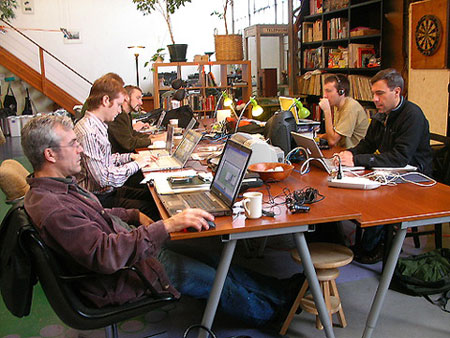
This comes by way of Duncan Rawlinson. A good follow up to my previous post on the co-working space Hat Factory in Dogpatch San Francisco. All I can say is this video makes me want to move to Vancouver tomorrow. It's not just the most beautiful co-working space ever it's bloody amazing. Wide open views overlooking the bay and mountains in Vancourver. Amazing.
Watch movie

Original post on February 13, 2007 from The Last Minute Blog: (RSS feed)

Workspace was on Canada AM (a national TV morning show in Canada) a while back. I ripped the video of the Canada AM website for your viewing pleasure: Video

(Via Mefeedia)

Wednesday, February 28

Co-working has jumped the shark

Heh, that looks farmiliar. The Hat Factory is on boingboing, now we know coworking has jumped the shark. Let's declare this fad done and stick a fork in it.

(Those san-franciscans are so incestuous. :)

From: Boing Boing: Co-working facilities for social-hungry solo freelancers

Cool piece in Businessweek about the rising popularity of "co-working" spaces for independent, internet-age freelancers who are burnt out on working from their homes (cons: too isolating, makes you crazy, no work/life boundaries) and don't want to just work out of Starbucks (cons: too public, not networking-conducive, laptop theft, rising price of lattes). Image above, hatfactory in dogpatch, San Francisco.


I said that all in jest of course.

In all honesty... co-working is the future, if only for the simple reason that in a future where we can work and live anywhere we want we all need to get out of the house sometime.

Other interesting trends are community bike shops and tool lending libraries. You might also notice trends with car co-ops and not that these things are are as here to stay as hostels and regular libraries and that they all serve the purpose of stimulating social capital (the base of all economics) by providing providing greater social and economic mobility.

Furthermore another trend is that these things can be done increasingly for profit debunking neo-con remarks about socialism. These newer trends are in infact the finest form of democracy and the free market in action to date as many sharp economists will tell you. Do not be fooled just because money doesn't change hands as in the case of wikipedia does not mean that it's not capitalism.

It reminds me of something Brewster Kale of Archive.org said of his idea of a great libarary of all the world's knowlege. To paraphrase poorly, "Who will fund this alexandria? The free market fund it, it's in businesses best intrest." ... or something like that... what he really said was way better you'll just have to google it.

The truth is there is a parrellel between a culture's economic wealth and providing many of the most basic needs... ie. it's social health. This does not mean people sitting on welfare checks as some idiots might misconstrue. This means...

1) "competing with free" is not only a fundamental prerequisite of modern business, not just intellectual property businesses like Music, but also necesities like water, food, shelter, clothing, education and an increasing array of services. In the U.S. somehow pretty much everyone has access to the necesities like water. Water is in fact free, and yet the water industry is so lucrative even a screw up like Coca-cola with Dasani can make money.

and

2) On some level providing free or cheap open unencumbered access to the tools that make society work is not just good business sense but maybe also a moral imperative. It's not socialist any more than wikipedia is socialist... it's just solid free market economics... give something away for free and hold something in reserve to sell for profit is a fundamental principal of doing business on the internet and the future of all business models. The trick is nowing how much to give away for free vs. how much to hold for sale and profit?

Ramble. Ramble. Ramble.